



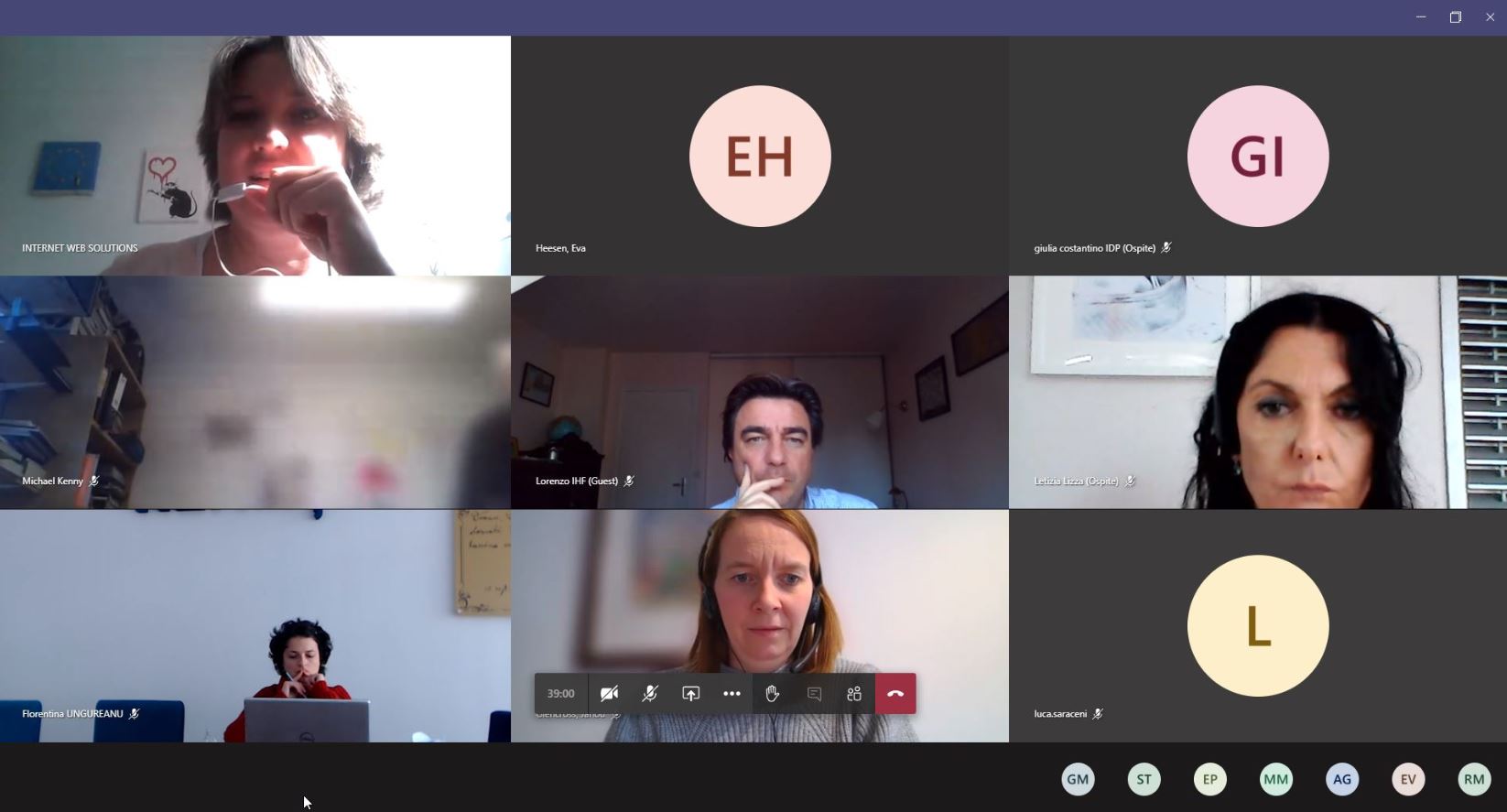
On November 12 and 13, 2020, the consortium joined the online Kick-Off Meeting of CREATE2Evaluate, a Project co-funded by the Erasmus+ Programme of the European Commission, which brings together eight Partners from seven countries (Belgium, Germany, Ireland, Italy, Poland, Romania, Spain). The Kick-Off Meeting, hosted by Niedersächischer Bund für freie Erwachsenenbildung e.V. (NBEB), was originally planned in Hannover (Germany) but has been rescheduled online due to COVID-19 restrictions.
The project draws on the lessons learnt from its predecessor – the CREATE project (Competitive Regions and Employability of Adults through Education), which equipped policymakers with tools to formulate better policies so to narrow the gap between strategy and implementation, highlighted the need for tools to evaluate existing strategies.
During the meeting, the consortium discussed about the overall implementation of the project, defining timelines, respective duties and activities that will take place in the following months.
CREATE 2 Evaluate will develop innovative tools devoted to policy makers at various layers of governance (from local to national and EU) to monitor and evaluate the impact and effectiveness of Adult Education (AE) policies and interventions.
CREATE 2 EVALUATE will make use of an existing platform which was designed and created for a previous project. This platform can be adjusted to also serve the needs of this project and partners will programme it to meet the needs of CREATE 2 EVALUATE.
Partners will map the current policy landscape in terms of evaluation, assessment and monitoring. The results will be specific country or regional (depending on the operating level of each partner) reports outlining the status quo of practice, all combined into one main report. As a repository of knowledge and data this paper will enable future users of the tools to compare their own contexts, to gage potential for application and to visualise perspectives of action.
Partners will draw on their own expertise, the results from the mapping phase and stakeholder input to develop a set of tools for evaluation (formative and summative) of AE policies. The selection of tools will take into account different purposes of evaluation (e.g. process, persuasive, symbolic, instrumental) as well as its role in the policy cycle. The goal is to make them as easily accessible and as directly applicable as possible to allow users to adopt them to their work realities without any hassle.
CREATE 2 EVALUATE will produce a final paper to stimulate the debate around evaluation and change the general attitude, which often sees evaluation as an unloved, time-consuming requirement instead of a true chance for improvement. Instead of shelving the results of pro forma evaluation procedures, the argument is to adjust evaluation to shed useful results which can truly inform future strategies in the domain of Adult Education.
All CREATE2Evaluate results will available in multilingual versions, free and without restrictions through the OER platform.


